%20(1).png)
How to Read Piano Notes - A Beginner's Guide

How to Read Piano Notes: A Beginner's Guide from Alexa's Piano Lessons in Ahwatukee
Learning how to read piano notes is one of the most empowering skills a musician can develop, and at Alexa’s Piano Lessons in Ahwatukee, AZ, we specialize in helping students of all ages discover just how enjoyable and accessible that process can be. Whether you’re a complete beginner or someone returning to the piano after years away, our warm, professional, and student-focused environment is designed to support your success at every step.

The process begins with understanding what piano notes are and how they’re written. In music, we communicate sound using a system of notation that includes symbols placed on a series of five lines called the staff. Each line and space on the staff represents a specific pitch. For piano music, we use a grand staff—a pair of staves joined together—made up of the treble clef (for higher notes, usually played with the right hand) and the bass clef (for lower notes, usually played with the left). The point where they meet is the note known as Middle C, and this is often the first note we teach in our Ahwatukee studio.
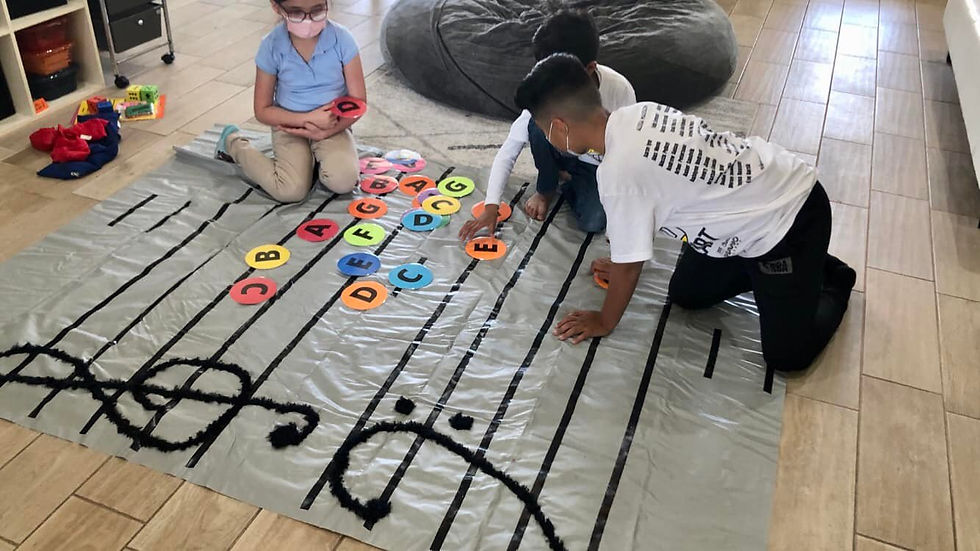
To make this learning process more intuitive, we teach students how to associate the lines and spaces on the staff with letters from the musical alphabet—A through G. These letters repeat in a cycle across the 88 keys of the piano. To remember which letters correspond to which line or space, we use mnemonics. For example, in the treble clef, the lines from bottom to top—E, G, B, D, F—can be remembered using the phrase "Every Good Boy Deserves Fudge." The spaces—F, A, C, and E—spell the word "FACE." Similar devices help with the bass clef, making it easy even for young learners to memorize note positions with confidence. You can learn more about this in our treble clef and bass clef blog posts.
While pitch tells us which note to play, rhythm tells us when and for how long to play it. A well-rounded musician must understand both. That’s why we spend a lot of time helping students learn how to recognize note durations—such as whole notes, half notes, quarter notes, and eighth notes. We use rhythm exercises that include clapping, tapping, and movement, helping students internalize timing in a natural, physical way. These concepts are reinforced through games and hands-on activities, especially in our popular kids piano lessons and teen piano lessons.
As students become more comfortable reading basic notes, we introduce accidentals—sharps and flats—that raise or lower the pitch of a note by a half step. This opens the door to understanding key signatures and scales, such as the B-flat major scale and B-flat minor scale. These are essential tools for more advanced music reading and are taught with clarity and context. Rather than memorizing these as abstract concepts, students at our studio learn by playing them, hearing the difference, and seeing how they function within real pieces of music.

What truly sets Alexa’s Piano Lessons apart is our integration of note reading into the act of playing. From the very first lesson, students begin matching the symbols on the page to their corresponding keys on the piano. We use engaging beginner repertoire such as “Hot Cross Buns” and seasonal favorites from our Halloween piano music to reinforce what they’ve learned in a musical, meaningful context. These experiences create a foundation of musical literacy that builds fluency over time.

To supplement learning outside of lessons, we offer a variety of tools and resources. Flashcards, educational apps, printable worksheets, and online games all help reinforce note recognition and rhythm practice. These are particularly valuable for families enrolled in our music lessons in Ahwatukee, where students benefit from both in-studio instruction and at-home support. Parents are encouraged to participate and celebrate progress, creating a well-rounded learning experience.
Adult learners are equally supported. Our adult piano lessons are designed with flexibility and encouragement in mind. Many adults arrive thinking they’re “too old” to learn music, only to discover that reading notes can be both accessible and rewarding. We focus on achievable goals, preferred learning styles, and a no-pressure atmosphere that makes piano learning enjoyable, not intimidating.
Consistency is one of the biggest factors in progress, and we emphasize this across all our lesson formats. Even short, focused daily practice sessions can produce great results. In our article on whether 30-minute piano lessons are enough, we explain how our structured approach helps maximize learning in minimal time. Combined with our range of options—including private lessons, group classes, and even free piano lessons—there’s something for every schedule and budget.
At the heart of Alexa’s Piano Lessons is our commitment to nurturing students at all levels. Led by Alexa Madison and supported by a team of experienced piano teachers, our studio serves as a trusted resource for Phoenix piano lessons and Ahwatukee music education. Our friendly, encouraging environment fosters a lifelong love of music while delivering tangible skills in every lesson.
If you’re ready to take the first step toward reading music with confidence, there’s no better time to begin. Schedule your free trial piano lesson in Ahwatukee today, explore group learning opportunities, or find the perfect plan on our piano lesson services page. We look forward to welcoming you to our studio and helping you unlock your full musical potential.
FAQs
1. How long does it take to learn how to read piano notes? Many of our students begin reading simple notes within their first few weeks of consistent practice.
2. What age is best to start learning piano? We welcome students as young as four years old and tailor each lesson to their age and learning style.
3. Do I need a full-size piano to practice at home? Not at all! A basic 61-key keyboard is a great start for beginners. However, we do offer rentals of full-size, weighted keyboards for only $20/month!
4. Is it hard for adults to learn how to read music? Absolutely not. With patience and the right support, adult learners can progress quickly and confidently.
5. How do I get started with Alexa’s Piano Lessons?
Simply schedule your free trial piano lesson in Ahwatukee, and we’ll guide you from there!


Comments